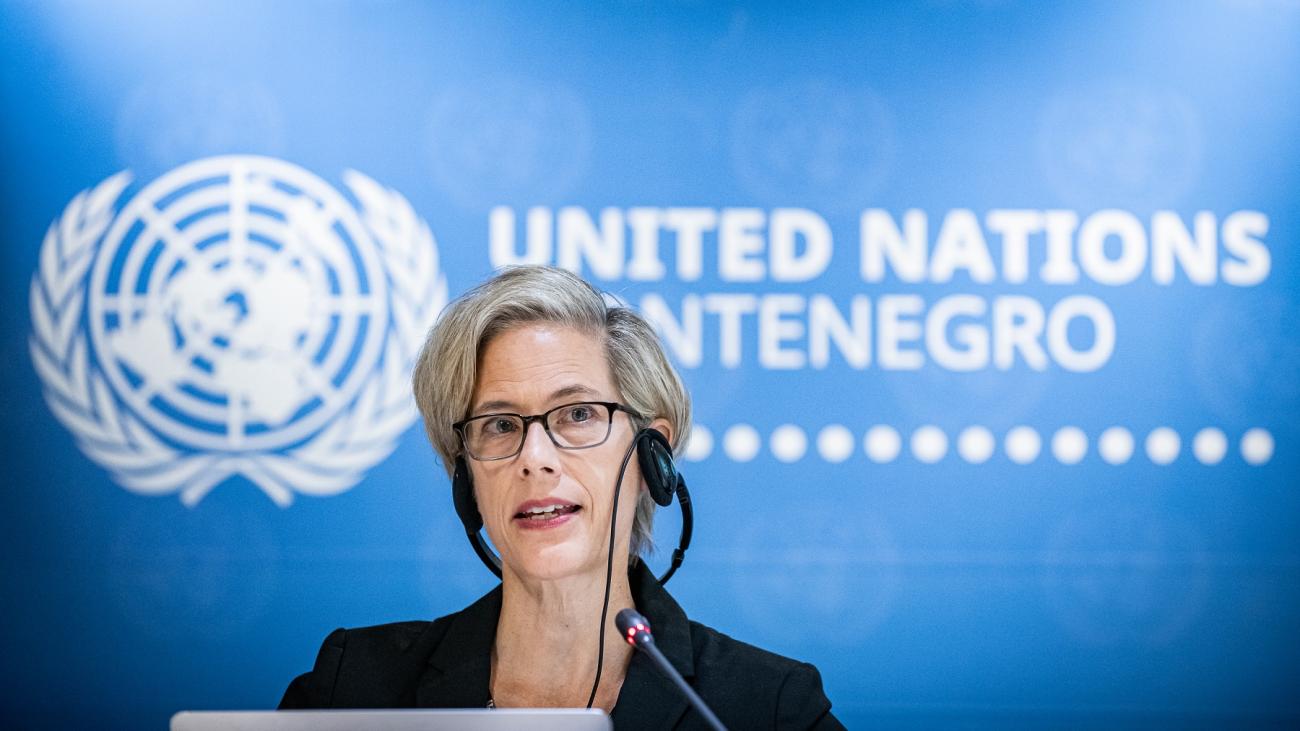


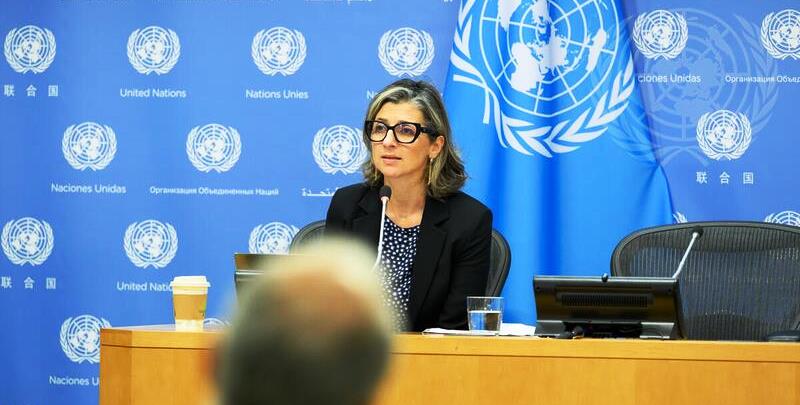
Francesca Albanese, Special Rapporteur on the situation of human rights in the Palestinian Territory occupied since 1967, briefs reporters at UN Headquarters. PHOTO/UN.
By PATRICK MAYOYO
A UN expert has sharply criticised the UN Security Council’s adoption of Resolution 2803, calling it a dangerous move that violates both the UN Charter and Palestinians’ right to self-determination.
Francesca Albanese Special Rapporteur on the situation of human rights in the Palestinian territories occupied since 1967, expressed grave concerns following the Security Council’s approval of the resolution on Monday.
Albanese warned that the resolution not only entrenches Israel’s illegal presence in Palestinian territories but also risks legitimising ongoing violence and systemic violations against Palestinians.
While Albanese acknowledged the Security Council’s recognition of the urgent need for a ceasefire in Gaza, she expressed disbelief that the Council had failed to base its actions on international law, particularly laws regarding self-determination, the use of force, and the protection of civilians.
“Despite the horrors of the last two years and the International Court of Justice’s clear rulings, the Council has chosen to ignore the very laws it is obligated to uphold,” she said.
Albanese pointed out that the UN Charter mandates the Security Council to act in accordance with the UN’s core principles. “Rather than pave a way toward ending the occupation and ensuring Palestinian protection, the resolution risks solidifying external control over Gaza’s governance, borders, and security,” she said. “This resolution betrays the people it claims to protect.”
Resolution 2803, which was adopted with 13 votes in favour and abstentions from Russia and China, puts forward a “security-first” approach that, according to Albanese, substitutes legal obligations to protect Palestinians with a model that reinforces existing power imbalances.
The Special Rapporteur argued that the resolution’s focus on “securing borders” and “disarming Palestinian groups” ignores the root cause of the conflict: Israel’s continued unlawful occupation, siege, racial segregation, and systemic human rights violations against Palestinians.
“It does nothing to address the underlying causes of the violence, and only seeks to disarm those fighting back against an occupying power,” Albanese stressed.
Albanese also condemned the plan to deploy a military force under a so-called “Board of Peace,” which would be chaired by the President of the United States, a nation heavily involved in the conflict and a long-time supporter of Israel.
“This is a clear attempt to impose US and Israeli interests by force, against a virtually defenceless population,” she said. “It leaves Palestine under the control of a puppet administration, with the US acting as the manager of an open-air prison.”
Calling for a shift in approach, Albanese argued that any international presence in the occupied territories should be mandated to supervise Israel’s immediate and unconditional withdrawal.
“Such a presence should protect civilians, guarantee the cessation of hostilities, prevent further displacement, and support the Palestinian people in their right to self-determination,” she stated.
Albanese stressed that Israel’s ongoing presence in Gaza and the wider occupied territories is an international crime that no state, including the United States, should recognise or assist in sustaining.
“The ICJ has made it clear that self-determination is an inalienable right of the Palestinian people. The UN and all member states must fulfil their obligation to assist in its realisation,” she said. “Replacing one abusive authority with another is not self-determination. It’s illegal.”
The Special Rapporteur called for a protective international presence in the occupied territories to end Israel’s unlawful occupation, stop the genocide, and restore Palestinians’ right to self-governance.
“Palestinians need protection, not surveillance over the ruins of their homeland. They need the blockade lifted, unrestricted humanitarian access, and the full enforcement of international law,” she said.
Albanese also warned that some countries might use the resolution as a “political pressure valve” to delay discussions on imposing sanctions or taking concrete actions against violations. “States cannot ignore serious breaches of international law just because a political plan offers temporary diplomatic convenience,” she said.
Asserting that the current moment is critical, Albanese urged the international community to prioritise justice, legality, and self-determination in efforts to resolve the conflict.
“This is an existential moment. We must not allow Gaza’s future , or the future of the Palestinian people, to be decided without their agency and consent. Only an approach rooted in justice and self-determination can bring genuine peace.”