


A Toyota Prado reportedly owned by DAP-K Party Leader Eugene Wamalwa, after it went up in flames after it was allegedly torched by UDA supporters in the Malava by-election.PHOTO/Citizen Digital.
By PATRICK MAYOYO
Thursday’s by-elections marked a significant moment in the country’s political progression, as they underscored persistent challenges to democratic consolidation, electoral integrity, and the growing dominance of party machinery in shaping the national political narrative.
With tragic reports of electoral violence, allegations of voter bribery, and widespread clan-based political dynamics, the elections offer both a sobering reflection of Kenya’s democratic progress and a depressing reminder of the fragile nature of electoral justice in the country.
Kenya’s political culture is inextricably linked to its ethnic makeup, and while the political arena has shifted considerably since independence, clan and ethnic allegiances continue to be pivotal in shaping voting patterns.
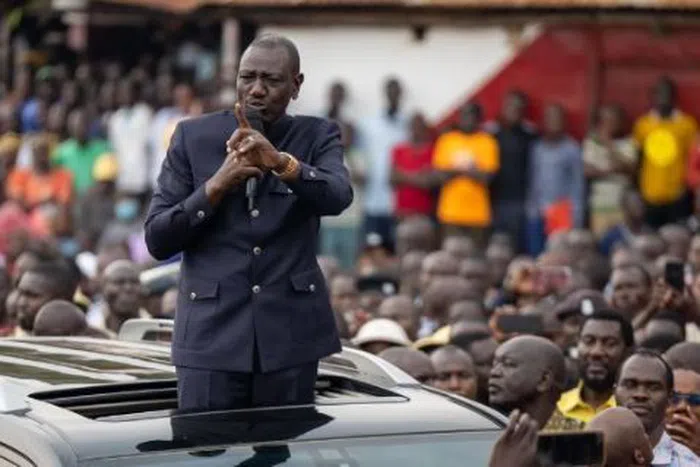
The Thursday by-elections mirrored these dynamics, with aspirants from the dominant political parties; the United Democratic Alliance (UDA), led by President William Ruto, and the Orange Democratic Movement (ODM), associated with the late former Prime Minister Raila Odinga, securing most of the contested seats across the country.
The results in key regions, such as Mbeere North, Magarini, Kasipul, Malava, and Ugunja, reflect the persistence of ethnic-based political patronage. In Mbeere North, the contest became a battleground between two factions of Mt. Kenya’s elite, with Deputy President Kithure Kindiki and his predecessor Rigathi Gachagua backing rival candidates.
While Kindiki, aligned with the UDA, secured victory for his candidate Leo Wamuthende, Gachagua’s support for Newton Kariuki reflected the deeper ethnic and clan-based rivalries that continue to define much of Kenya’s political contestation.
The manner in which the UDA and ODM have become the vehicles of broader ethnic coalitions reflects the enduring salience of ethnicity in determining political fortunes, despite efforts to shift towards more issue-based politics.
Such ethnic divides can breed dangerous levels of political competition, where loyalty to ethnic blocs often trumps adherence to democratic ideals and national unity.
The rhetoric surrounding “state-sponsored politics” during the Mbeere North race, where Gachagua accused Kindiki’s camp of using state machinery to tilt the scale in their favour, further highlights the partisan and clan-driven nature of Kenyan elections.
Even as these contests are framed as battles for development and continuity, they often obscure the deeper currents of ethnic mobilisation that fuel divisions in Kenya’s body politic.

Malava DAP-K aspirant Seth Panyako. PHOTO/UGC.
One of the most troubling aspects of the by-elections was the violence that marred the polls. Reports of more than four deaths, along with injuries in various parts of the country, highlight the fragility of Kenya’s electoral processes.
Violence has long been a feature of elections in Kenya, from the infamous 2007 post-election violence to the more recent contested 2017 presidential results. The elections on Thursday underscored the persistence of violence as a tool for political intimidation and the suppression of opposition voices.
The proximity of these elections to the 2027 general election; a flashpoint in Kenya’s electoral history, is a stark reminder of the need for electoral reforms that can address the systemic use of violence as a political tool.
The 2007 elections, which saw the manipulation of results and a subsequent violent outpouring of ethnic clashes, left deep scars in Kenyan society.
The Kriegler Report, which documented the malpractices during the 2007 elections, highlighted the pervasive electoral fraud, voter suppression, and state-sponsored violence that underpinned the results, sparking one of the most violent episodes in post-independence Kenya.
While Kenya has made significant strides since then, particularly with the 2017 Supreme Court ruling that nullified the presidential election results due to electoral malpractices, the violence that flared up during these by-elections raises pertinent questions about the effectiveness of the reforms.
The use of violence as a tool for political control in these by-elections, particularly in areas with a history of electoral unrest, reveals that the country’s political elite have not fully shed the mentality of “winning at all costs.”
Without stronger safeguards to protect the integrity of the electoral process, the threat of violence remains a significant impediment to free and fair elections in Kenya.
Alongside violence, allegations of voter bribery and result manipulation continue to cast a shadow over Kenya’s elections. The allegations of vote-buying in the by-elections point to the persistent issue of electoral fraud, which continues to plague the political system.
In many constituencies, particularly in rural areas, political candidates resort to cash handouts, foodstuffs, and other forms of patronage to secure votes. This form of manipulation not only undermines the fairness of the electoral process but also erodes public trust in the legitimacy of elected officials.
Furthermore, the role of political parties and their ability to deploy resources to manipulate outcomes should not be underestimated.
While the UDA and ODM dominated the by-elections, their ability to field candidates with vast financial and logistical support raises concerns about the fairness of the competition.

ODM’s Magarini MP-elect Harrisson Kombe. PHOTO/UGC.
The influence of money in Kenyan elections, particularly in the context of the 2027 general elections, threatens to further entrench the power of established political elites, while marginalising opposition voices and stifling genuine political competition.
This situation is compounded by the lack of effective mechanisms to monitor and enforce transparency during elections. The failure to tackle voter bribery effectively, alongside the absence of a robust independent electoral oversight body, leaves the system vulnerable to manipulation by political forces with deep pockets and a vested interest in maintaining control over the electoral process.
Looking ahead to the 2027 general election, the lessons from these by-elections are clear. First, the deep ethnic and clan rivalries that shaped the outcomes of these contests are unlikely to disappear anytime soon.
This means that political parties must confront the challenge of transforming Kenya’s electoral system from one driven by ethnic loyalties to one rooted in issue-based politics.
If Kenya’s political elites continue to rely on tribal affiliations and divisive rhetoric, the country risks seeing more election-related violence and further democratic regression.
Second, the continuing allegations of electoral malpractice, including voter bribery, violence, and result manipulation; suggest that Kenya’s electoral reforms remain unfinished.
While the 2017 Supreme Court ruling was a milestone in ensuring electoral justice, the absence of sustained political will to address electoral malpractices, coupled with the deep-rooted problems of electoral violence, suggests that these reforms may not be enough to prevent future electoral crises.
Finally, President William Ruto’s response to the by-election results; which framed the opposition’s loss as a rejection of ethnic politics and a call for a “manifesto-based” politics, highlights the growing disconnect between the rhetoric of national unity and the reality of entrenched political patronage.
His emphasis on development and “a united nation” may offer a path forward, but it will require genuine political reform to break the cycle of electoral manipulation and ethnic division.
Kenya’s recent by-elections serve as a microcosm of the country’s broader political challenges. The mix of clan-based rivalries, electoral violence, voter bribery, and manipulation of results underscores the continuing fragility of Kenya’s democracy.
The lessons from the 2007 post-election violence, the 2017 Supreme Court ruling, and the ongoing electoral tensions must not be lost on the political leadership as the country prepares for the 2027 general elections.
Without significant reforms aimed at addressing these challenges, Kenya’s democracy remains at risk of regression into the very same practices that have undermined its political development in the past.