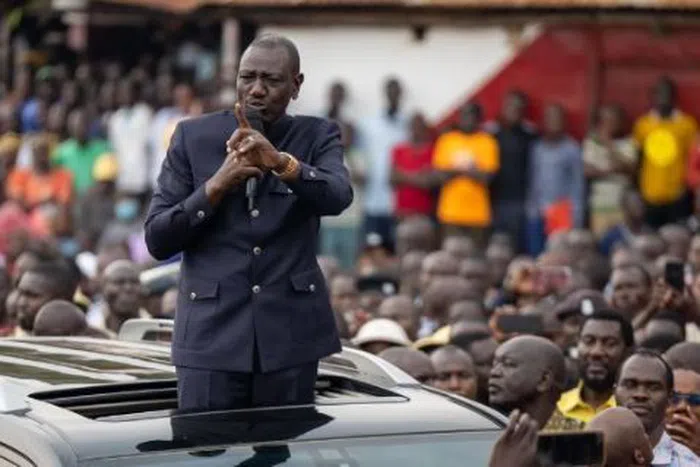


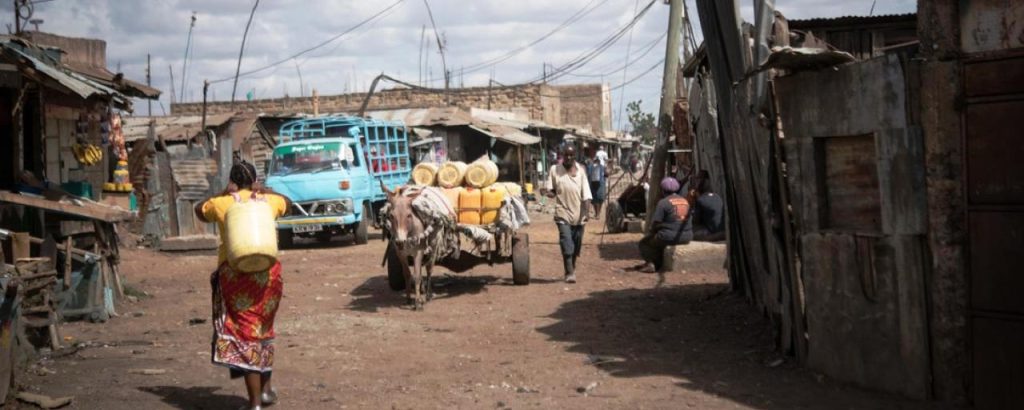
While a minority of super-rich Kenyans are accumulating wealth and income, the fruits of economic growth are failing to trickle down to the poorest. PHOTO/ Allan Gichigi/Oxfam.
By JIM KAZUNGU
Kenya is grappling with an alarming rise in inequality, with a new report revealing that the country’s 125 richest individuals now hold more wealth than 43 million Kenyans, more than three-quarters of the population.
The Oxfam Kenya report says despite strong economic growth since 2005, poverty remains rampant, with nearly half of the population living on less than Sh 130 per day, deepening the divide between the wealthy elite and the vast majority of citizens.
According to the study, Kenya’s extreme poverty rate stands at 46 percent, making it the 15th highest globally. Over the past decade, the number of Kenyans living in extreme poverty has increased by 37 percent, or an additional 7 million people, highlighting a worrying trend.
This stark contrast between economic growth and widespread poverty reveals a systemic issue in wealth distribution, with the richest 125 individuals controlling more wealth than 77 percent of the population combined.
While the nation’s economy has grown by an average of five percent annually (excluding 2020), the benefits of this growth have largely by-passed the majority of Kenyans.
The report warns that unless there is a significant re-distribution of wealth, the situation will worsen, leading to heightened social unrest, as evidenced by the protests over the 2024 Finance Bill.
The impact of this inequality is felt most acutely by women, particularly those living in poverty or rural areas, and in arid and semi-arid lands (ASALs).
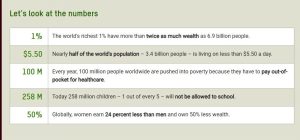
INFOGRAPHIC/OXFAM
Women in male-headed households hold only one-third of the assets compared to their male counterparts, and for every Sh 100 earned by a man, a woman earns just Sh 65. Furthermore, women are five times more likely to be engaged in unpaid work than men.
In rural communities, where women work on farms, only six percent hold legal ownership of land, an issue exacerbated for those in the poorest households.
This limited access to land and resources has contributed to economic disenfranchisement, with women in the poorest 20 percent facing a one-in-two chance of being unemployed, compared to one-in-five for men in the richest 20 percent.
Education and healthcare systems are also struggling under the weight of inequality. The richest families can afford expensive private education, while children from the poorest 20 percent of households receive nearly five fewer years of schooling.
The government’s per-pupil funding for primary schools has also decreased, reaching only 18 percent of its 2003 value when adjusted for inflation. Meanwhile, higher education remains increasingly unaffordable for students from low-income families.
The healthcare system, similarly, is plagued by underfunding and inefficiencies. Chronic underinvestment has led to uneven access to services, with the richest relying on private healthcare while the poor remain dependent on a fragile public system.
While a new compulsory health insurance scheme was introduced in 2024, it remains out of reach for many, especially those in the informal sector, where only 4 million people are contributing. The result is rising health inequities, with only 20 percent of National Health Insurance funds directed to public healthcare facilities.

Kenya’s fiscal health is also concerning, with a significant portion of government revenue being consumed by debt repayment, 68 percent of every 100 shillings collected in taxes goes towards servicing debt, double the amount from 2017.
This is a worrying trend, particularly as corporate tax dodging continues to undermine Kenya’s tax base, costing the government an estimated $1.1 billion each year. This amount is nearly twice the entire health budget for 2015/16, a country where maternal mortality rates remain alarmingly high.
In addition, the job market remains extremely informal, with 85 percent of Kenyans working in the informal sector. Gender pay gaps persist, and women are disproportionately employed in low-paid informal jobs. Even when women enter the formal labour force, they often face barriers due to unpaid care duties and societal norms.
The report stresses the urgent need for systemic reforms to address the deepening inequality. Recommendations include progressive taxation, increased investment in essential public services like education and healthcare, and policies aimed at improving land ownership for women and marginalised groups. It also calls for reforms in the job market, with a focus on raising wages and expanding access to formal employment opportunities.
The Government of Kenya must act decisively to tackle these issues, with targets to reduce income inequality and close the gender gap. By implementing policies to ensure better wealth distribution, the country can move towards a more equitable and prosperous future for all its citizens.
Kenya’s inequality crisis is not inevitable, but it requires urgent political will to tackle. The wealthy elite continue to capture the lion’s share of economic growth, leaving the majority of Kenyans in poverty. Without transformative reforms, millions more will be pushed into extreme poverty in the coming years. With strong political commitment and the right policies, Kenya can reverse this trend and build a more equal society.
However, the window for change is narrowing, and the consequences of inaction will be felt across the entire nation. The time to act is now.