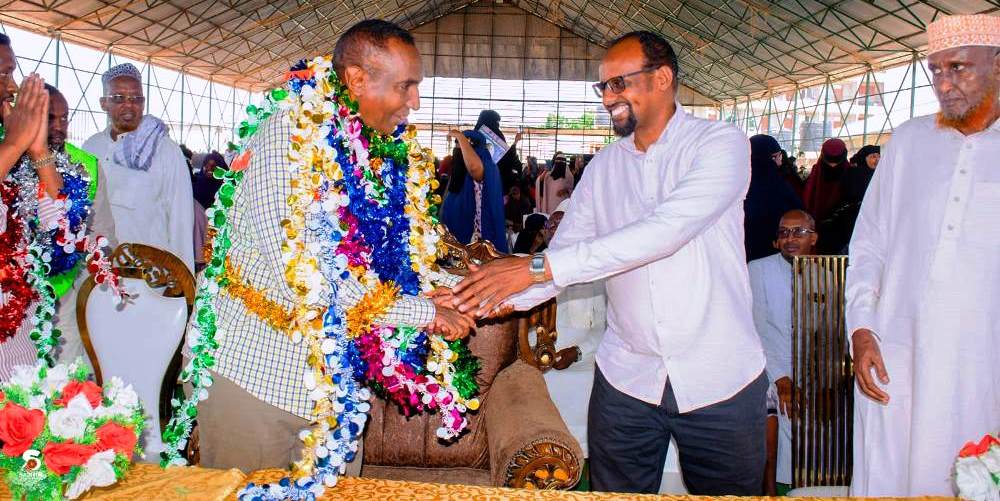


Former cabinet minister and Lugari MP, Cyrus Jirongo. PHOTO/UGC.
KEY HIGHLIGHTS
- Climax Coaches driver whose bus collided with Jirongo’s car claimed he was carrying 65 passengers, unless the bus was overloaded, the seating capacity for most buses is 40-56 passengers.
- There is a four-hour window from the time Jirongo left Oasis Bar in Karen heading to his home in Gigiri, why did it take him four hours to cover a distance of 80 kilometres to Karai, where he was involved in an accident.
- Jirongo’s Mercedes-Benz E350 has Safety Restraint System (SRS) or Electronic Control Unit (ECU), which record speed, impacts and airbag deployment, investigators are expected to retrieve these data.
- Airbags of the Mercedes-Benz E350 reportedly failed to deploy, an anomaly in severe frontal collisions.
- Mystery surrounds the passengers who were in the Climax Coaches bus as none recorded a statement with the police immediately after the collision which is supposed to be a standard police procedure.
- Even controversially none of the passengers took pictures of the incident and posted them on social media platforms as Kenyans are known to do during such incidents.
- The postmortem conducted on his body revealed that the cause of death was blunt force trauma, a term that often raises more questions than answers.
- There is the question of a Probox vehicle that trailed Jirongo into a petrol in Naivasha before his car sped-off.
By PATRICK MAYOYO
On the morning of 13 December 2025, Kenya was jolted by the tragic news of the death of Cyrus Jirongo, a former cabinet minister and prominent legislator for Lugari Constituncy.
Jirongo, a well-known politician and businessman, lost his life in a road incident on the Nairobi–Nakuru highway. The accident has left the country grappling with questions surrounding the circumstances of his death, adding to a long history of controversial fatalities among other notable Kenyan personalities.
From the mysterious demise of then Foreign Minister Robert Ouko to the unresolved death of Anglican Bishop Alexander Muge, Kenya’s political and social fabric has often been torn by the untimely deaths of figures who were either actively involved in public life or wielded significant influence in the country’s history.
Investigations into Jirongo’s death are ongoing, the postmortem revealed that he died from blunt force trauma, further complicating the case. His sudden and violent passing on the busy Nairobi–Nakuru highway has raised multiple contradictions and theories, not unlike the deaths of other well-known figures whose fatalities have been shrouded in controversy.
Jirongo’s death was marked by several irregularities that have become synonymous with high-profile fatalities in Kenya. Jirongo, a businessman and former legislator, was well known for his role in Kenyan politics. As a minister in the 1990s, and later as the MP for Lugari, Jirongo made a significant impact in the political arena.
However, his death has drawn attention not only because of his political stature but also due to the unclear details surrounding the incident.
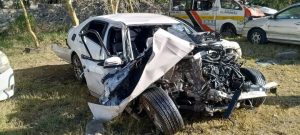
Jirongo’s Mercedes car that was involved a head-on collision with Climax Coaches bus. PHOTO/FILE.
Reports indicate that Jirongo was travelling along the Nairobi–Nakuru highway when his vehicle was involved in a head-on collision with a bus under unclear circumstances. His vehicle, a Mercedes-Benz E350, collided with a Climax Coaches bus that was said to be carrying 65 passengers to Busia, according to a police statement.
Mystery surrounds the passengers who were in the Climax Coaches bus, as none recorded a statement with the police immediately after the collision, which is ordinarily standard police procedure, or even took photographs of the incident and posted them on social media platforms as Kenyans are known to do during such incidents.
The postmortem conducted on his body revealed that the cause of death was blunt force trauma, a term that often raises more questions than answers. While this might point to the violence of the crash, it has left several important questions unanswered: Was the crash the result of mechanical failure?
Was it an accident, or is there another, more sinister explanation? Investigations are still underway, but the ambiguity surrounding the cause of the crash has fuelled suspicion and speculation.
As forensic teams revisit the scene, the four-hour window from Karen demands phone records, additional CCTV footage and passenger accounts. Kenya’s history of opaque investigations into high-profile deaths heightens the stakes: transparency could dispel conspiracy theories or expose serious flaws. Without it, doubts persist.
The Directorate of Criminal Investigations (DCI) has vowed to trace Jirongo’s prior movements, including recording statements from those at the Karen bar, and to submit a file to the Director of Public Prosecutions.
Independent forensic analysis presents a different account. Experts point to primary damage on the rear-left quarter and wheel area, including an inward-shattered tail lamp and distortion, consistent with a strike from a faster, heavier vehicle while Jirongo’s car was slowing or decelerating.

Climax Coaches bus that was involved a head-on collision with Jirongo’s car. PHOTO/FILE.
Frontal damage, including an asymmetrical engine block collapse, appears secondary and catastrophic, rather than indicative of a self-initiated head-on collision.
Investigators are expected to retrieve data from the Mercedes’ Safety Restraint System (SRS) or Electronic Control Unit (ECU), which record speed, impacts and airbag deployment, despite advanced Pre-Safe features that should have activated protective measures. Airbags reportedly failed to deploy, an anomaly in severe frontal collisions.
Jirongo had been a figure of significant controversy during his political career. He was deeply involved in business and political dealings that had raised eyebrows for years. Some had accused him of benefiting from corrupt practices, while others suggested that his influence and business dealings might have made him enemies.
Such a figure, with a history of being embroiled in both business and political conflicts, was bound to generate conspiracy theories upon his death. Some critics have already pointed to the timing of the accident and the circumstances surrounding it, with speculation about possible foul play.
The tragic death of Jirongo is merely the latest in a series of high-profile fatalities that have plagued Kenya over the years. Many of these deaths have been marked by suspicious circumstances, unresolved investigations, and widespread public intrigue.
The unresolved nature of these cases has led to a pervasive sense of mistrust regarding official investigations, with many Kenyans speculating about the involvement of powerful figures behind the scenes.
Late Foreign Minister Dr Robert Ouko

Dr Robert Ouko. PHOTO/UGC.
Perhaps one of the most famous and controversial deaths in Kenyan history was that of then Foreign Minister Robert Ouko in 1990. Ouko, a rising star in Kenya’s political scene, was found murdered under highly suspicious circumstances.
Ouko had been one of President Daniel arap Moi’s key ministers, but in the years leading up to his death, he had started to make enemies within Moi’s inner circle. Ouko had been outspoken about corruption within the government, and it is believed that this made him a target.
His body was found burned and mutilated, and the investigations into his death were fraught with contradictions. Initially police had indicated that Ouko had committed suicide.
A later assessment by a British investigative team led by John Troon suggested that public opinion, fed by the theory of suicide, might have been influenced by the milieu in which Ouko operated.
Troon also conceded that Ouko’s attitude and demeanour, and some of his actions during the last days of his life, may have given some people the impression that he was in a mindset suggestive of suicide.
Troon’s theory that the Kisumu Molasses Project and a possible “Corruption Report” linked to it might have provided a motive for murder was based on a file of allegations handed to Scotland Yard, reportedly at the direction of President Moi, made by individuals associated with a company that had tendered to Ouko when he was Minister for Industry to restart the Molasses Project in Kisumu.
Despite widespread suspicion of political assassination, Ouko’s death remains unresolved. Over the years, many theories have circulated regarding his murder, with some speculating that it was an orchestrated killing carried out by powerful figures in the government at the time.
Despite numerous investigations and inquiries, Ouko’s death remains one of Kenya’s most high-profile unsolved mysteries. The lack of closure has left many questioning the integrity of the state’s investigative bodies, particularly given the political dynamics at the time.
Anglican Bishop Alexander Muge
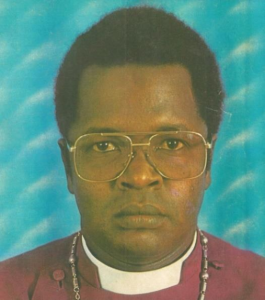
The-Rt-Rev-Bishop-Alexander-Kipsang-Muge. PHOTO/UGC.
Another tragic and controversial death was that of Anglican Rt. Rev Bishop Alexander Muge in 1990. Muge was a fierce critic of the Moi regime and had often used his platform to speak out against corruption and human rights abuses.
His bold stance made him a target for political leaders who were uncomfortable with his activism. Muge was killed in a car accident, but many believed that his death was no accident. His car was reported to have swerved off the road and crashed, killing him instantly.
However, the circumstances surrounding his death were never fully explained, and suspicions persisted that it was a deliberate act of political retaliation.
Like Ouko’s death, Muge’s passing raised questions about the safety of those who spoke out against the government at the time. Both men were highly vocal critics of the regime, and their deaths have been remembered as tragic symbols of the dangers that come with challenging powerful political forces in Kenya.
Father John Antony Kaiser: A Priest’s Final Hours

Father John Kaiser. PHOTO/UGC.
Father John Antony Kaiser, an American missionary priest, was another prominent figure whose death raised questions and was linked to politically motivated killings.
In 2000, Kaiser was found dead in his car in a remote area of the Rift Valley, with a gunshot wound to his head. Kaiser had spent years advocating for the rights of the poor and marginalised in Kenya, particularly those affected by land displacement caused by political and economic forces.
His outspoken views often brought him into conflict with powerful landowners and government officials. His death was officially ruled a suicide, but many suspected foul play, especially given the controversial nature of his activism.
Despite numerous investigations, the case remains unsolved, and like the deaths of Ouko and Muge, it has contributed to the widespread belief that the Kenyan government may have been involved in silencing critics through violent means.
British tourist Julie Ann Ward

British Tourist Julie Ward. PHOTO/UGC.
In September 1988, British tourist Julie Ann Ward, a 28-year-old publisher’s assistant from Suffolk, travelled solo to Kenya’s Masai Mara to pursue her passion for wildlife photography. On 2 September, she drove from Nairobi to the reserve but disappeared after being last seen alive on 3 September.
Her body was discovered on 7 September, severely mutilated. Initial reports suggested an animal attack, but the nature of her injuries contradicted this theory.
Kenyan authorities quickly suggested suicide, a conclusion rejected by Julie’s family. Julie’s father, John Ward, was determined to uncover the truth. Upon visiting Kenya, he discovered significant flaws in the investigation, such as the mishandling of evidence and a suspiciously incomplete timeline.
John’s relentless pursuit revealed that local authorities had failed to fully investigate the circumstances of Julie’s death, which became clear after an autopsy revealed signs of foul play, indicating she may have been attacked by someone familiar to her.
For over 20 years, John Ward fought to keep the case alive, appealing to both the British and Kenyan governments, and returning to Kenya several times. His efforts led to new evidence, but the investigation remained incomplete.
It seemed that Kenyan authorities, focused on protecting the tourism industry, were less concerned with justice, and there were whispers of similar unresolved cases involving foreign tourists. Despite the lack of a final resolution, John Ward’s persistence ensured that Julie’s death did not fade into obscurity.
More than three decades later, the mystery still haunts both the UK and Kenya. Julie’s legacy as a wildlife photographer endures, while the question of who was responsible for her brutal death remains unanswered. John’s fight for justice continues, driven by the love of a father for his daughter.
Thomas Joseph Odhiambo Mboya

Thomas Joseph Odhiambo Mboya was a significant figure in Kenya’s post-independence politics. Born on 15 August 1930, Mboya played a crucial role in the country’s transition to independence.
He was a key founder of the Kenya African National Union (KANU), which led the fight for independence. Mboya was also the founder of the Nairobi People’s Congress Party and served as the Minister of Economic Planning and Development after Kenya gained independence in 1964.
His policies aimed at modernising Kenya’s economy and improving living standards, making him one of the country’s most influential politicians. However, Mboya’s career was marked by political controversies.
His modernising ideas and support for a strong central government alienated some conservative leaders. This rift intensified after independence, as political factions within the government grew. His vision of a united, modern Kenya made him both an ally and an enemy.
Mboya was assassinated on 5 July 1969, while entering Nairobi’s Trade Centre building. He was shot multiple times by Nahashon Isaac Njiru, who was quickly arrested and convicted of murder.
However, the true motives behind the assassination remain unclear, and some speculated that it was politically motivated, possibly involving rivals within the government or external forces due to his pan-Africanist views.
Despite an investigation, the full truth behind his death has never been revealed. Mboya’s death marked a turning point in Kenya’s political landscape, as his vision for the future of the nation was never realised.
Over fifty years later, his assassination remains one of Kenya’s greatest unsolved political mysteries, and his legacy continues to influence the country’s history.
The unresolved death of Pio Gama Pinto
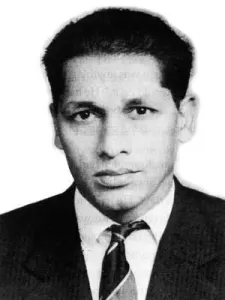
Pio Gama Pinto. PHOTO/UGC.
Pio Gama Pinto, a prominent Kenyan journalist and politician, was assassinated on 25 February 1965 in Nairobi under circumstances that remain shrouded in mystery to this day.
Pinto, a staunch advocate for African unity and social justice, was a key figure in Kenya’s independence movement and a vocal supporter of progressive politics. His views, however, made him many enemies, particularly among the more conservative factions in the government.
On the fateful day of his death, Pinto was sitting in his car with his young daughter, waiting for the gate of his home to open. At that moment, a gunman approached and shot him at close range. The attack was swift and brutal, and Pinto was left fatally wounded in front of his family.
His wife, Emma, and three young daughters were left to cope with the aftermath of this shocking and senseless act of violence. Kisilu Mutua was arrested for the killing, but many questions remained about his role in the assassination.
While he was charged and convicted, many Kenyans believe that he was not the true mastermind behind the murder. It is widely suspected that Pinto was killed by a powerful group known as the “Kiambu Mafia”—a faction within the political elite who viewed his progressive stance as a threat to their interests.
At the time of his death, Pinto left behind a family who would forever bear the weight of his untimely and unresolved murder. His legacy as a fighter for social justice and African unity endures, but the full truth behind his assassination remains elusive, a haunting chapter in Kenya’s political history.
The unresolved death of Josiah Mwangi Kariuki (JM)
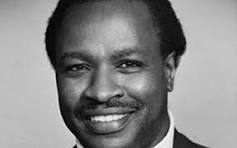
JM Kariuki. PHOTO/UGC.
Josiah Mwangi Kariuki, known to many as ‘JM’, was a prominent Kenyan politician and socialist during the administration of President Jomo Kenyatta.
A passionate advocate for land reforms and social justice, JM’s outspoken criticism of the government’s policies and his advocacy for the rights of the poor made him a controversial figure in Kenya’s post-independence political landscape.
JM rose to prominence after independence in 1963, holding various government positions, including that of Assistant Minister for Agriculture. His strong views on the redistribution of land, particularly in favour of the landless and disadvantaged communities, earned him both admiration and suspicion.
JM’s vocal support for socialist principles and his commitment to addressing the growing inequality in Kenya made him a target for powerful elites who felt threatened by his progressive stance.
On 2 March 1975, JM was found brutally murdered under mysterious circumstances. His body was discovered in Ngong Forest, and signs of torture were evident.
Despite the obvious signs of foul play, the exact details surrounding his death remain unclear to this day. Several theories surround JM’s assassination. Some believe he was killed by political rivals within the government who saw him as a threat to the status quo.
Others suggest his death was orchestrated by powerful political figures in the Kenyatta administration, particularly those connected to the ruling elite who had much to lose from his push for reform.
Though a few individuals were arrested in connection with the murder, including members of the police force, no one was ever convicted, and the true perpetrators behind the killing remain unidentified.
JM’s death remains one of the most significant unresolved political assassinations in Kenya’s history, a tragic reminder of the cost of political dissent in a turbulent era.
These deaths, along with many others, highlight the long-standing patterns of controversy that surround the fatalities of prominent personalities in Kenya.
Whether through car crashes, shootings, or other unexplained incidents, these deaths have raised serious concerns about the safety of those who challenge the political establishment.
The tragic death of Jirongo is only the latest in a long history of unresolved fatalities involving prominent Kenyan personalities. From Robert Ouko to Pio Gama Pinto, many of Kenya’s most influential figures have died under suspicious circumstances, leaving a legacy of unanswered questions and conspiracy theories.
As investigations continue into Jirongo’s death, it is clear that Kenya’s history of controversial deaths is far from over. Whether these deaths are the result of accidents, political conspiracies, or criminal activities, they underscore the deep-seated mistrust that many Kenyans feel towards official investigations.
Until these cases are properly resolved, as recommended in the Truth and Justice Reconciliation Commission (TJRC) report, the country will continue to live with the dark legacy of unexplained fatalities, and the contradictions surrounding these deaths will persist in the public consciousness.
In a country that has witnessed significant political turmoil, these controversial deaths serve as stark reminders of the dangers faced by those who seek to challenge the political establishment, as well as the enduring power of conspiracy theories that continue to shape the narrative around prominent deaths in Kenya.