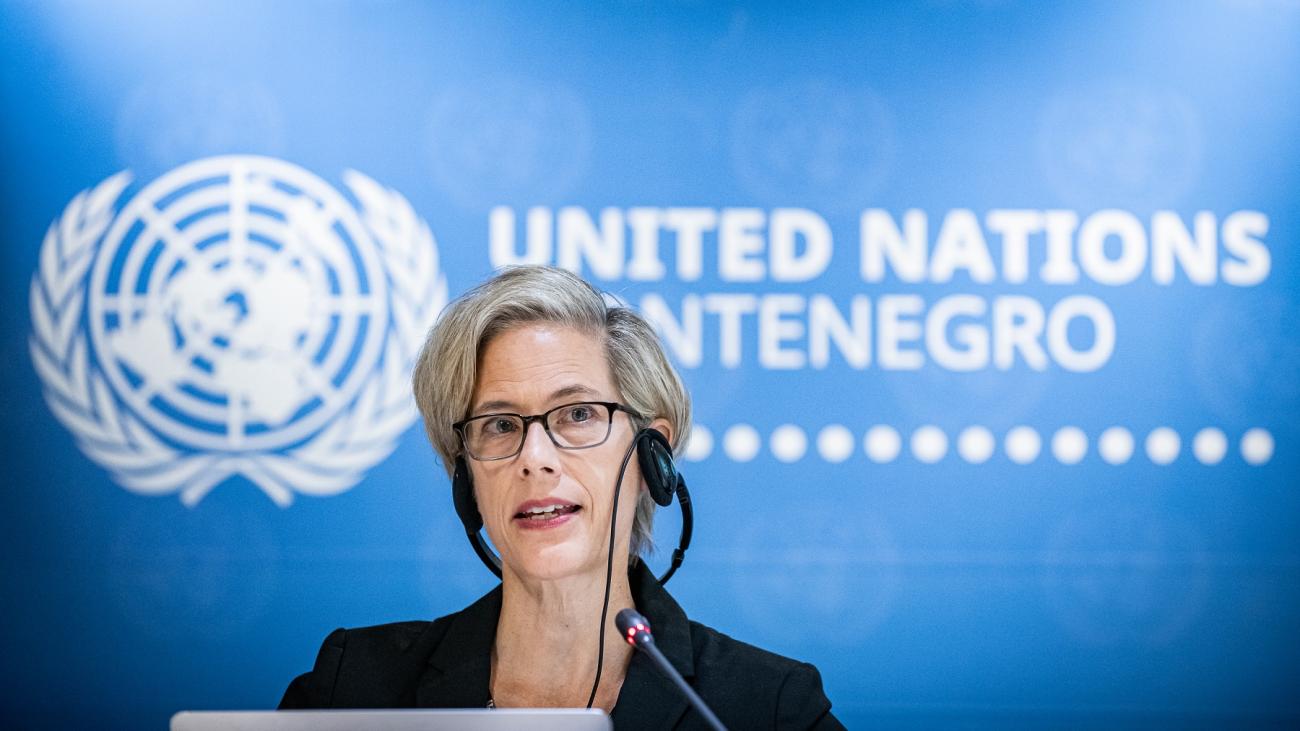


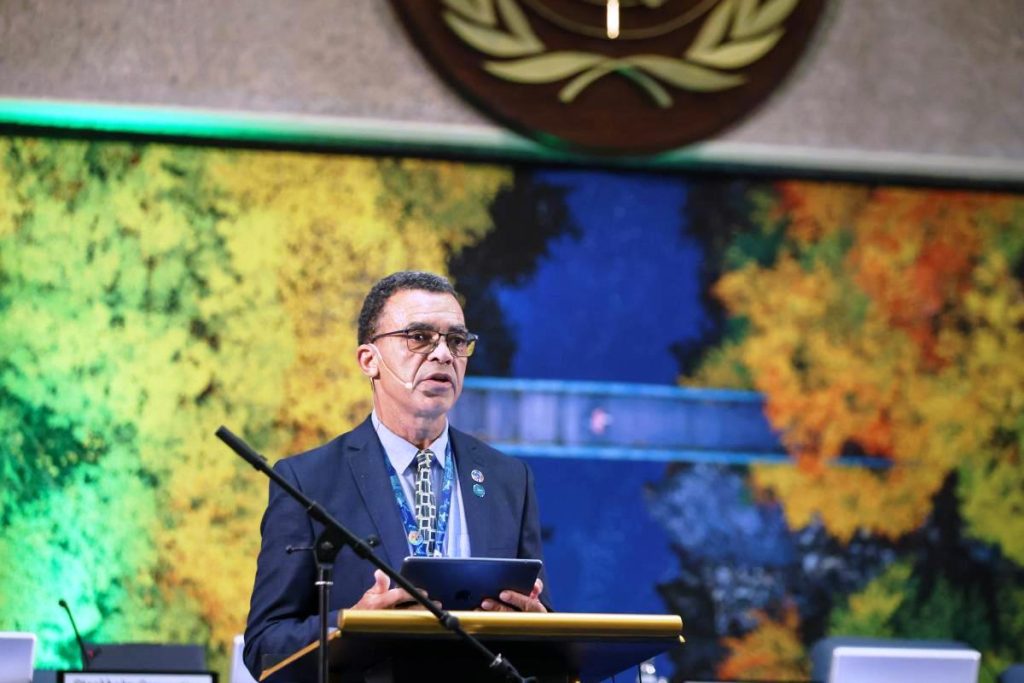
Dr David Obura, the Chair of the Intergovernmental Platform on Biodiversity and Ecosystem Services (IPBES). PHOTO/ ENB-IISD/Anastasia Rodopoulou.
By PATRICK MAYOYO
Global leaders and stakeholders should adopt a more holistic and transformative approach in addressing the planet’s escalating environmental crises, the Chair of the Intergovernmental Platform on Biodiversity and Ecosystem Services (IPBES), Dr David Obura, has said.
In a powerful address at the United Nations Environment Assembly (UNEA-7) in Nairobi, under the theme “Advancing Sustainable Solutions for a Resilient Planet,” Dr Obura called for urgent action to tackle the root causes of environmental degradation and promote long-term sustainability.
The coral reef ecologist who is also a director, CORDIO East Africa emphasised the importance of working with nature, rather than against it, to foster resilient ecosystems and societies.
Dr Obura stressed those efforts to combat the global environmental challenges of today, such as biodiversity loss and climate change, need to be more than just reactive solutions to immediate issues. Instead, there must be a concerted effort to understand and address the deeper, systemic causes driving environmental harm.
“Transformative change means shifting the way we approach our environmental challenges. We must look beyond short-term fixes and focus on the underlying drivers of biodiversity loss and ecosystem degradation,” Dr Obura said.
“This means rethinking how we interact with the natural world and ensuring that our solutions are not just sustainable but equitable, allowing for long-term resilience for both people and the planet,” he added.
Dr Obura also highlighted the importance of cross-sectoral cooperation in developing effective policies, citing the alignment between scientific panels like the Intergovernmental Panel on Climate Change (IPCC), the Global Environment Outlook (GEO), and the new chemicals and waste assessment panel.
He underscored the need for coordinated science to better understand and address shared challenges from multiple perspectives. The scientist also explored the concept of sustainable development, which he said requires a careful balance between nature, economy, and society.
In his remarks, he broke down the sustainable development agenda into key focal areas, particularly the Sustainable Development Goals (SDGs), which he described as essential building blocks for creating a more just and sustainable world.
He further called on environmental multi-lateral agreements (MEAs) to increase their use of IPBES’s core scientific findings and frameworks, which emphasise the inter-connectedness of human and environmental well-being.
These include the recognition of nature’s role in supporting human livelihoods, understanding the root causes of environmental degradation, promoting equity in the sharing of benefits, and embracing a diversity of values and worldviews, including those of Indigenous Peoples and local communities.
“We are all inter-connected, whether our focus is on nature, economy, or society,” Dr Obura noted. “The approach must be whole-of-government, recognising that every aspect of government is affected by and dependent on nature. It must also be whole-of-society, acknowledging the need for engagement from all levels of society in solving these complex issues.”
Dr Obura also pointed to the importance of fostering momentum from the bottom up, particularly in encouraging local communities to engage in policy discussions and environmental governance.
He urged international policymakers to adopt inclusive approaches that integrate grassroots knowledge and local practices with broader governmental strategies.
“True transformative change requires that all of society steps up; moving from formal statements to real dialogue, from policy design to meaningful implementation,” he stressed. “We must create spaces for exchange on best practices, knowledge sharing, and science-based solutions that can drive sustainable outcomes.”
Dr Obura reinforced the role of businesses in this transformation, encouraging the private sector to embrace sustainability as a core principle of their operations, the focus of IPBES’s next assessment, due in February 2026.
He called on industries to align with the broader goals of environmental protection, social equity, and long-term economic resilience, all of which are vital to achieving the 2030 Agenda for Sustainable Development.
“We are at a critical juncture,” Dr Obura said. “The science is clear, and the need for action has never been more urgent. The time for transformative change is now.”
The UNEA-7, which brings together over 190 member states, environmental experts, and stakeholders from across the globe, continues to serve as a vital platform for addressing the world’s most pressing environmental challenges.
With Dr Obura’s call for action, the global community is urged to step forward, embrace transformative solutions, and work collectively towards a more resilient and sustainable future for all.