

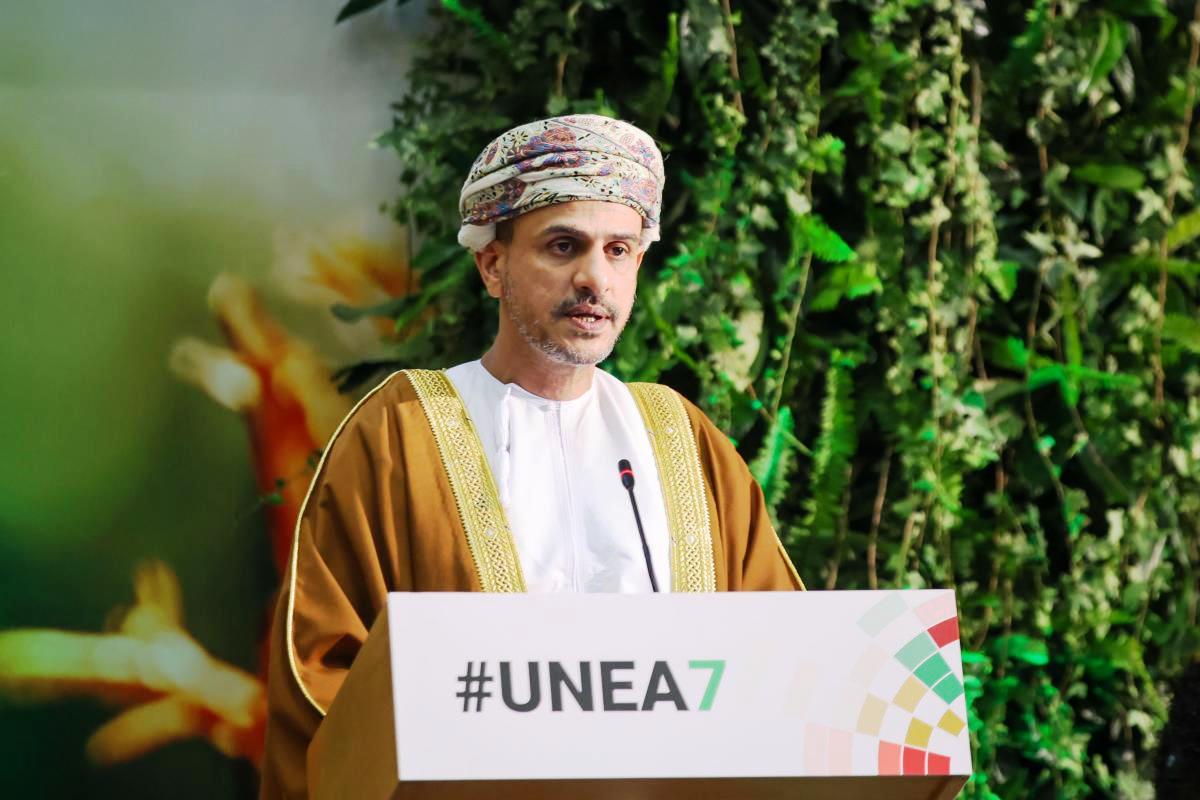
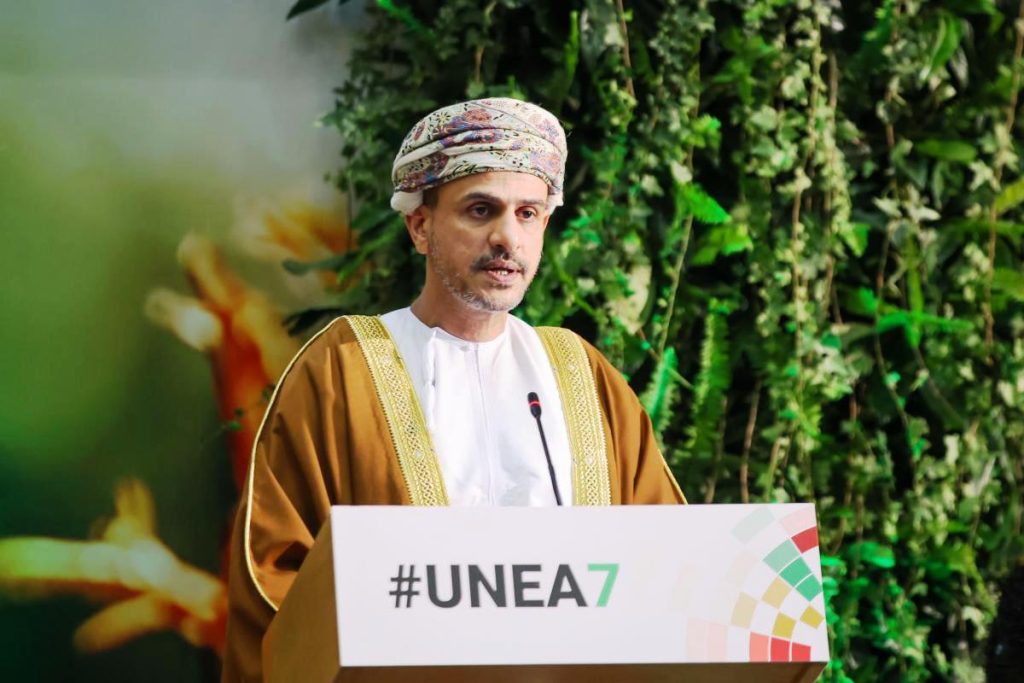
UNEA-7 President Abdullah Bin Ali Al-Amri, Oman. PHOTO/ ENB-IISD/Anastasia Rodopoulou.
By PATRICK MAYOYO
In a powerful opening address to the Multilateral Environmental Agreements (MEAs) Day at the seventh session of the UN Environment Assembly (UNEA-7), Abdullah Bin Ali Al-Amri, the President of UNEA-7, stressed the urgency of collective action to address the planet’s most pressing environmental challenges.
With less than five years left to achieve the 2030 Agenda for Sustainable Development, Al-Amri called on governments, international bodies, and civil society to come together and harness the power of multilateral cooperation.
“Today marks a defining moment in our decade of action,” Al-Amri said. “We have less than five years to meet the Sustainable Development Goals (SDGs), and the challenges we face are interconnected. Our collective efforts must reflect this interconnectedness. We cannot afford to work in silos.”
The opening remarks set the tone for a day of reflection and dialogue among over 170 countries and representatives from nearly 30 global and regional environmental agreements. MEAs Day, which is held during UNEA-7, provides an opportunity to assess the role of international treaties in addressing the world’s environmental crises.
The event brought together leaders from a range of sectors, highlighting the importance of synergy and collaboration across national, regional, and international levels.
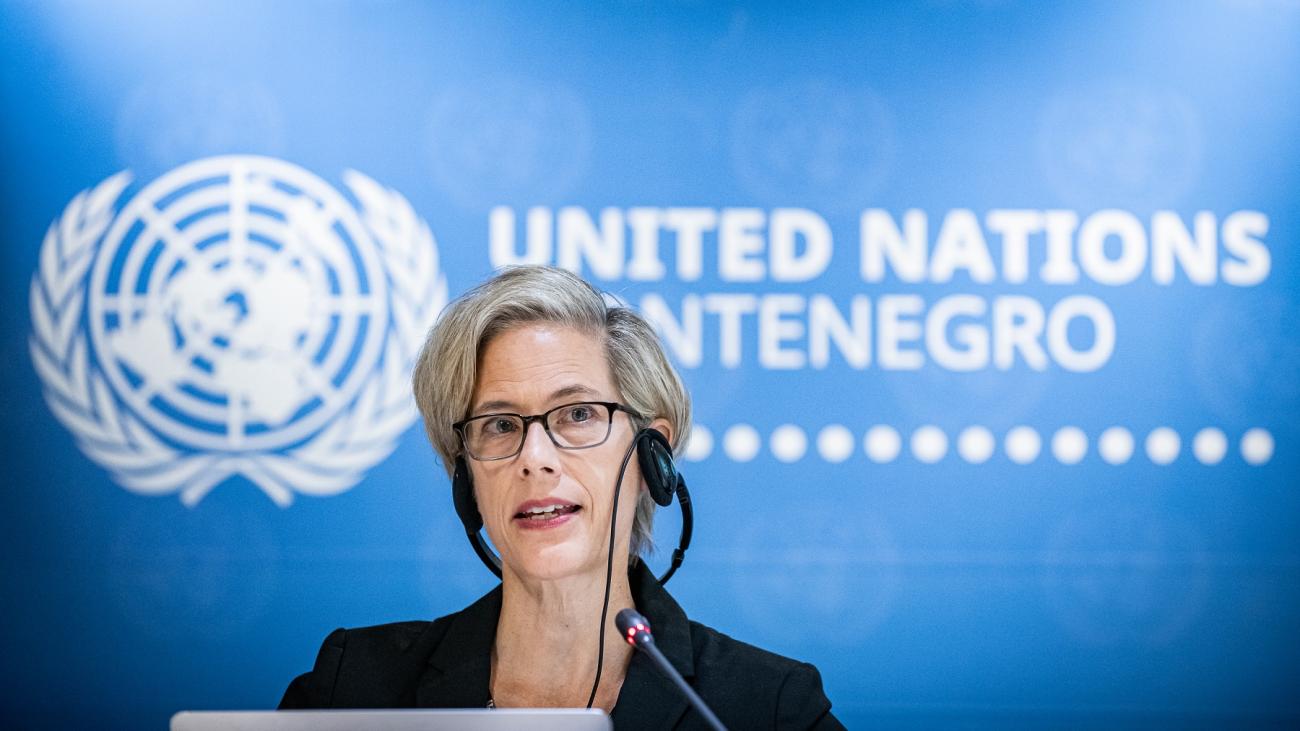
Inger Andersen, Executive Director of the UN Environment Programme (UNEP), also addressed the session, reinforcing the importance of overcoming fragmentation in global environmental governance.
“Fragmentation comes at a high cost,” Andersen said. “But the benefits of synergistic, unified action are enormous. We must build bridges across policies, agreements, and sectors to tackle the triple planetary crisis of climate change, biodiversity loss, and pollution.”
A critical theme that emerged throughout the day was the need to strengthen synergies between different environmental agreements. Delegates from various countries and organisations stressed that the challenges of climate change, desertification, biodiversity loss, and pollution are deeply interconnected and cannot be solved in isolation.
Key initiatives were presented that sought to align efforts across these areas, with many highlighting the importance of integrated national strategies, data-sharing mechanisms, and the involvement of local communities and Indigenous Peoples.
One notable example of integrated action came from Bojan Kumer, the President of the 23rd Meeting of the Contracting Parties to the Barcelona Convention (COP23), who spoke about the Mediterranean Strategy for Sustainable Development.
The strategy, which spans from 2016 to 2025, aims to align the region’s socioeconomic goals with the achievement of the SDGs, focusing on a “source-to-sea” approach that addresses land-based pollution entering the marine environment.
“We recognise that pollution in the Mediterranean is a cross-border issue,” Kumer said. “Through enhanced cooperation across countries and regions, we can create a cleaner, more sustainable Mediterranean. The connection between land and sea is crucial in addressing the marine pollution crisis.”
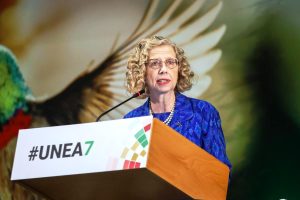
Inger Andersen, Executive Director, UNEP. PHOTO/ ENB-IISD/Anastasia Rodopoulou.
Saudi Arabia’s Vice Minister of Environment, Water, and Agriculture, Mansour Hilal Almushaiti Alanazi, also highlighted his country’s efforts to combat desertification through the Riyadh Global Drought Resilience Partnership, which was launched at the UN Convention to Combat Desertification (UNCCD) COP16.
The partnership aims to support developing countries in building resilience to the impacts of desertification, providing a model for cross-border cooperation on sustainable land management.
Brazil’s Vice-Minister for Climate, Energy, and Environment, André Aranha Corrêa do Lago, who spoke via video message, echoed the call for multilateralism, highlighting the success of COP30 in reaffirming the benefits of cooperation.
“COP30 has shown us that multilateralism is not just a theory but a practical necessity for tackling climate change,” he said. “Only through collaboration can we address the climate emergency effectively and equitably.”
However, despite the broad consensus on the importance of cooperation, challenges remained in reaching agreement on several key resolutions. The Committee of the Whole (CoW), which deliberates on draft resolutions and decisions, struggled to reach consensus on issues such as deep-sea ecosystems and the cryosphere.
Delegates from countries including Vanuatu and Indonesia withdrew contentious resolutions, but committed to continuing efforts through other channels.
Vanuatu’s decision to withdraw a resolution on deep-sea ecosystems was met with mixed reactions. While some delegates expressed disappointment, others welcomed the announcement of a new initiative to advance deep-sea science and knowledge-sharing, particularly Indigenous science, which many delegates called essential for effective environmental governance.
“Indigenous knowledge has long been central to the stewardship of our oceans,” said Joswa Aoudou, speaking for the Presidents of the Basel, Rotterdam, and Stockholm (BRS) Conventions.
“It is imperative that we integrate these traditional practices into our scientific understanding to ensure that environmental policies are both inclusive and effective,” Aoudou added.
The day also saw calls for greater attention to the role of Indigenous Peoples and local communities (IPLCs) in environmental decision-making. Several speakers, including representatives from Palau, Tanzania, and Colombia, stressed the need to integrate Indigenous knowledge into policy and MEA frameworks.
Daniela Durán González, from Colombia’s Ministry of Environment and Sustainable Development, underscored the interconnected nature of climate change, desertification, biodiversity loss, and pollution.
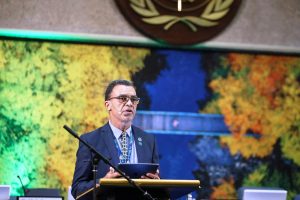
Intergovernmental Science-Policy Platform on Biodiversity and Ecosystem Services (IPBES) chair David Obura speaking at UN Environment Assembly (UNEA-7). PHOTO/ ENB-IISD/Anastasia Rodopoulou.
She pointed to the need for integrated solutions that respect the integrity of MEAs and ensure that the mandates of each agreement are preserved. “Addressing these issues requires a holistic approach,” she said. “We cannot afford to compartmentalise environmental issues when the solutions are inherently interconnected.”
Air pollution was another key issue highlighted at the event. Jeanne-Marie Huddleston, Chair of the Executive Body of the Convention on Long-range Transboundary Air Pollution of the UN Economic Commission for Europe (UNECE), called air pollution one of the greatest risks to human health.
She highlighted the 2025 G-20 Cape Town Ministerial Agreement on Air Quality, noting the need for synergies across MEAs to address this pervasive problem. “Air pollution doesn’t respect borders,” she said. “To effectively tackle it, we need integrated, cross-border action.”
In addition to thematic discussions, the day also featured reports from various countries and organisations on their progress towards MEA implementation.
The EU highlighted the role of institutional coherence and the importance of a whole-of-government approach, while the UK called for closer engagement with the IPBES, emphasising that “science gives us clarity, and collaboration gives us strength.”
Several countries, including Mexico, the UAE, and Tanzania, presented innovative approaches to implementing MEAs within national frameworks. Mexico’s presentation focused on nature-based solutions, highlighting mangrove restoration projects that provide co-benefits for climate change mitigation, biodiversity protection, and coastal resilience.
Tanzania, in turn, shared the development of its National Biodiversity Strategy and Action Plan (NBSAP), which integrates multiple environmental priorities into a cohesive national strategy. Similarly, Fiji stressed the importance of an integrated approach, noting that the SDGs and MEAs are inseparable for small island states (SIDS), which face unique environmental challenges.
“There is no sustainable development without environmental sustainability,” said Fiji’s representative. “For SIDS, the implementation of MEAs and SDGs is not just a matter of policy; it’s a matter of survival.”
In the closing sessions, UNEA-7 delegates continued to emphasise the importance of moving beyond traditional multilateral practices to address the triple environmental and political crises. UNEP’s Legal Advisor also clarified the procedural complexities around reintroducing withdrawn resolutions, ensuring that the meeting adhered to the rules of procedure.
As the session concluded, UNEA-7 President Al-Amri’s call for “synergy, collaboration, and urgent action” reverberated across the room. Delegates left MEAs Day with a renewed sense of purpose, understanding that the time to act is now, and that only through strengthened collaboration can the world hope to tackle the pressing environmental crises of our time.