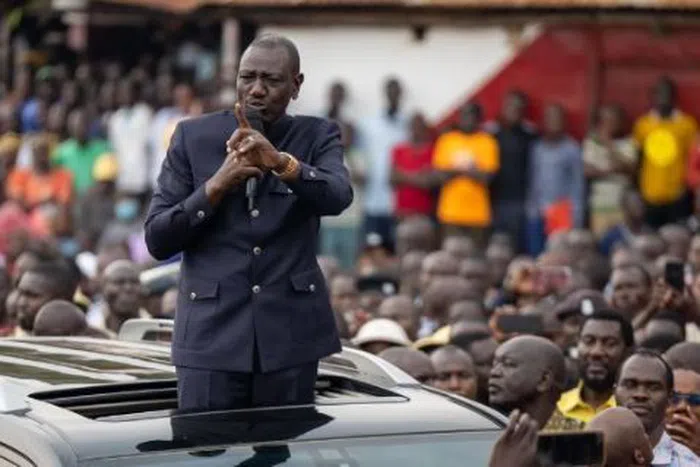


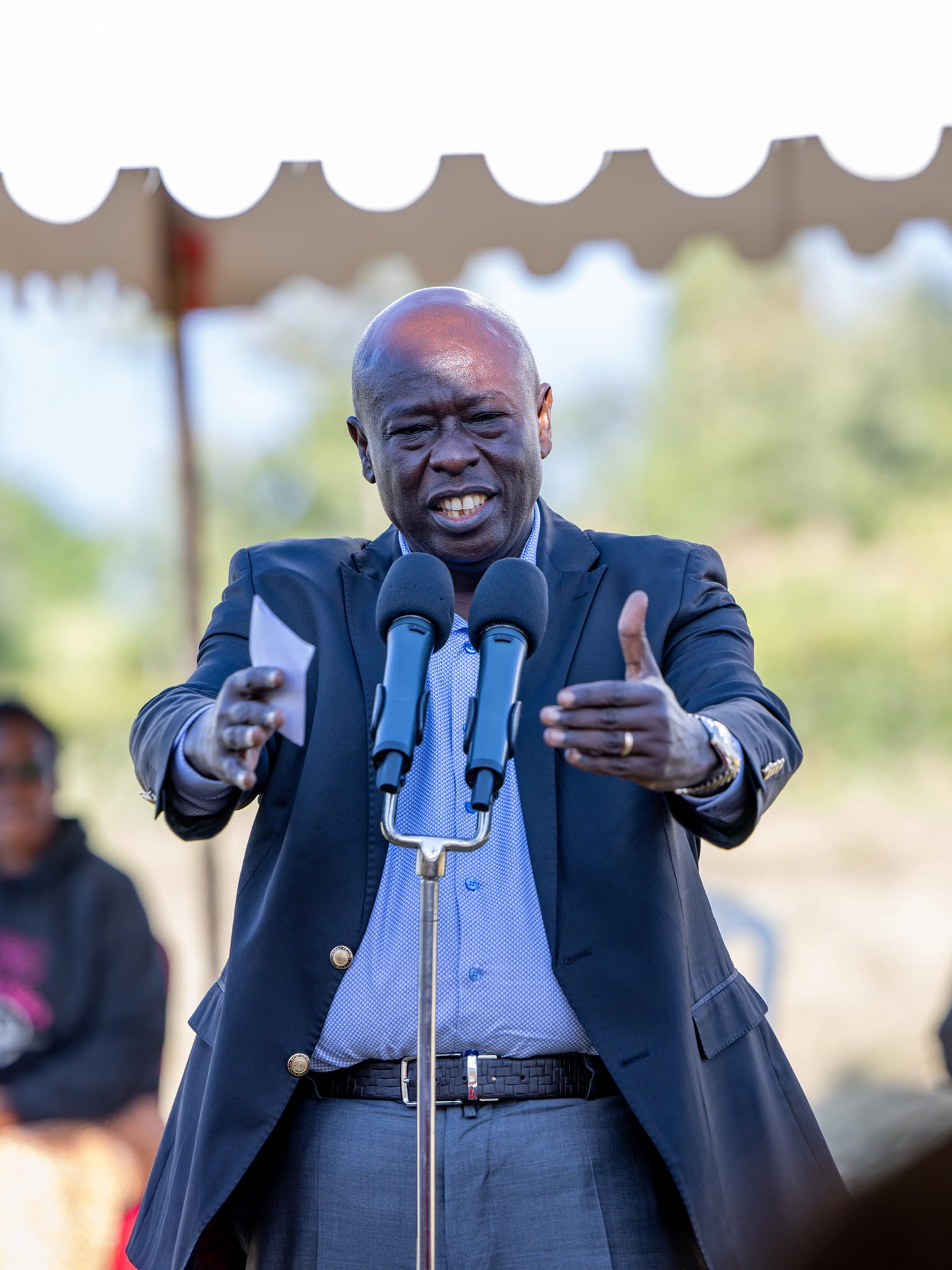
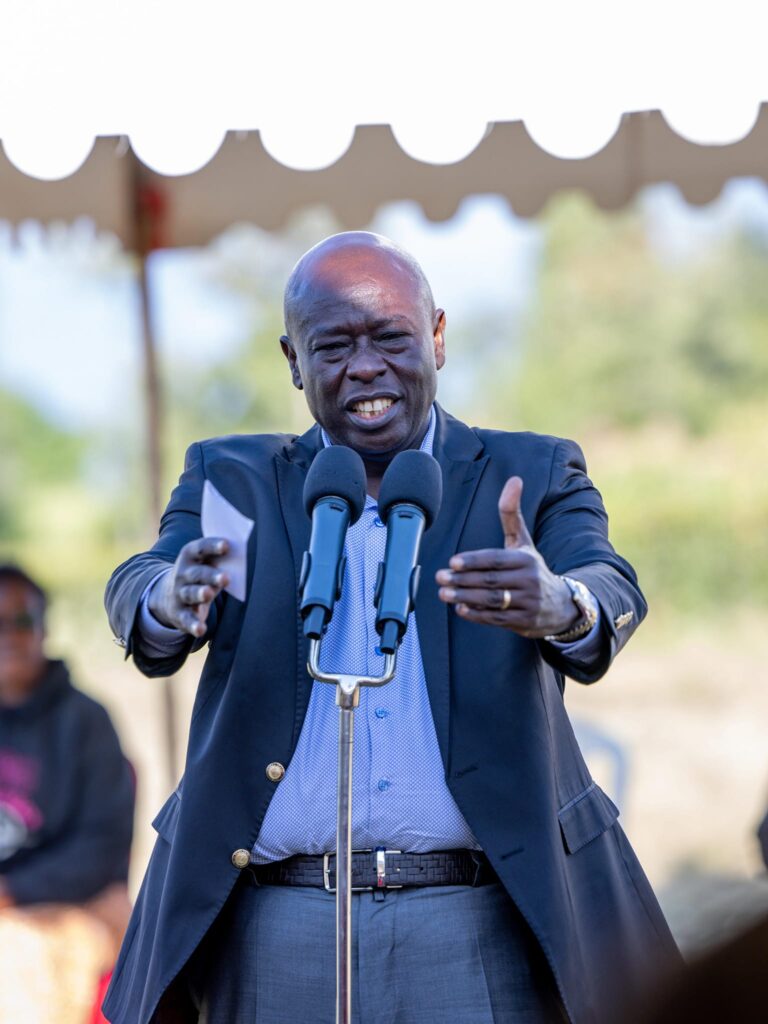
Former Deputy President Rigathi Gachagua. PHOTO/UGC.
By PATRICK MAYOYO
It is becoming increasingly clear that former Deputy President Rigathi Gachagua is emerging as a significant liability to a united opposition in the country.
A loose cannon with a penchant for reckless, unsubstantiated statements, Gachagua’s recent remarks about a purported seat-sharing deal with Wiper leader Kalonzo Musyoka have stirred unnecessary division and cast a shadow over the opposition’s fragile unity.
Let’s start with the most recent debacle: Gachagua’s claim that his party, the Democracy for Citizens Party (DCP), had an agreement with Kalonzo to control all major seats in Nairobi County. This included the governorship, senator, women’s representative, 16 out of 17 parliamentary seats, and 75 out of 85 ward seats.
The revelation, made during a church service on November 30, was swiftly and unequivocally rejected by Kalonzo, who called it “pure political propaganda.”
The Wiper leader’s denial was as emphatic as it was necessary. Why? Because Gachagua’s brazen assertions, which were not only false but also deeply divisive, do nothing but sow discord in the opposition ranks. In a political environment already brimming with tension, Gachagua’s habit of making baseless claims threatens to unravel the collective efforts towards 2027.
How can you trust someone who negotiates in the public eye, with a tongue that runs loose at every turn, leaving no space for thoughtful deliberation and unity?
This is far from the first time Gachagua has stepped out of line. His entire political strategy appears centred on inflating his own significance, with little regard for the delicate coalition he is supposed to be part of. While Kalonzo, Dr. Fred Matiang’i, and other opposition leaders have worked hard to present a united front, Gachagua has done nothing but undermine their efforts.
The very notion of a united opposition, striving towards a singular presidential candidate to challenge President William Ruto, is increasingly threatened by Gachagua’s personal ambition and lack of discipline.
At the core of Gachagua’s actions is an apparent belief that his political clout, particularly within the Kikuyu community; gives him an edge, and thus, entitlement to substantial control within the opposition. His claims of the Kikuyu having the largest voter base, especially in Nairobi, are not in dispute. But his demand for a disproportionate share of the political spoils is where the problem lies.
His constant refrain that DCP deserves a lion’s share of the seats in the capital is not just an act of political bravado, but a dangerous flirtation with ethnic politics. His messaging sounds less like a call for unity and more like a tribal plea.
It is this kind of rhetoric that alienates many within the opposition who rightly see it as counter-productive to the collective goal of defeating Ruto in 2027.
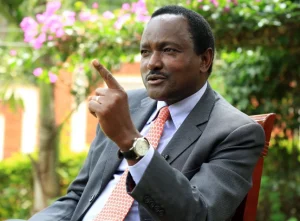
Wiper party leader Kalonzo Musyok. PHOTO/UGC.
Gachagua’s ambition for the presidency also adds fuel to this fire. By launching DCP and publicly stating his intention to run for the highest office, Gachagua not only risks splitting the opposition vote but also undermines the very premise of the united front they’re trying to build.
His aggressive stance on power-sharing further entrenches the divisions within the group. When he makes grandiose demands of 40-50 percent control of the future government, it’s clear he’s playing a high-stakes game of political poker, but with the opposition’s unity on the line.
Perhaps what is most galling is the hypocrisy of Gachagua’s approach. On one hand, he decries others in the opposition who operate from the “comfort” of boardrooms, suggesting they are out of touch with the electorate.
On the other hand, his own political moves, from the divisive rhetoric to the backroom dealings; echo a man more interested in self-aggrandisement than genuine leadership. His call for unity rings hollow when his every action seems to prioritise his own ambitions over the collective good.
It is this insatiable desire for personal power that makes him such a difficult figure for the opposition to work with. His clashes with key figures like Dr. Matiang’i and leaders of Jubilee, including his advice to Matiang’i to form his own party, have only deepened the fault lines within the opposition.
This is not the behaviour of someone committed to building consensus; rather, it is the conduct of a politician who views the opposition as a stepping stone to his own aspirations.
The United Opposition, in its current form, has its fair share of issues; factions, differing interests, and competing ambitions. However, Gachagua’s reckless statements and self-serving actions have done more to damage that unity than anything else.
He consistently “ruffles” the opposition, pulling in his own direction while simultaneously expecting others to follow. His latest antics in Nairobi are simply the latest example of how his behaviour is not just a personal liability but a collective one for the opposition.
As we head into the crucial 2027 elections, the question must be asked: Can a united opposition afford to have Gachagua as part of its fold? His desire for prominence, paired with his inability to play in harmony with other opposition leaders, risks shattering any hope of a united challenge against Ruto. In the delicate balancing act that is Kenyan politics, Gachagua’s actions could well prove to be the straw that breaks the camel’s back.
The opposition must decide whether it will continue to indulge Gachagua’s erratic behaviour or whether it is time to cut ties with a man who seems more interested in his own ascent than in the collective success of the movement.
One thing is certain: if Gachagua’s behaviour goes unchecked, the United Opposition will fracture; and the dream of unseating Ruto in 2027 will remain just that: a dream.